


Dec. 22, 2025
Modeling universality in human history
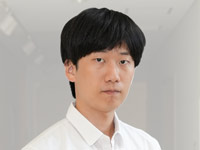
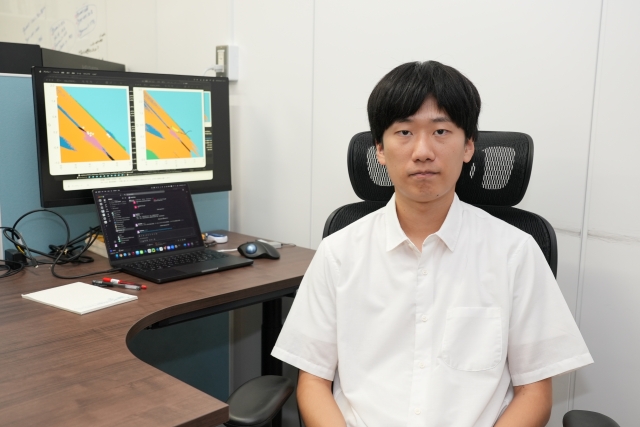
Kenji Itao, Special Postdoctoral Researcher
Describe your role at RIKEN.
I study why human societies—both in different regions and during different historical periods—often form similar social structures. For example, I recently used mathematical models to explore how social institutions (which create the rules defining acceptable behaviors and the punishments for violators) emerge from interactions between individuals sharing resources.
What excites you the most about your current research?
In my modeling, I have identified mechanisms by which people sharing common resources spontaneously form simple but effective social rules. They often develop turn-taking systems and cooperate through mutual monitoring. These include showing restraint when resources are scarce, but exploiting resources when other people are richer. This outcome is striking because sustainable resource use is maintained by individual decisions—whether to consume or wait—without any opportunity to negotiate.
How did you become interested in this field?
I have always enjoyed traveling, and I am fascinated by the richness of human cultures. At the same time, I often feel a sense of nostalgia when I discover similarities between my own culture and others. This curiosity about both diversity and commonality led me to search for universal patterns. Physics provides powerful tools for tracking this and combining it with anthropology led me to study human history through mathematical modeling. It is fascinating to see such rich behaviors emerge from simple models and to discover clear parallels with real-world societies. I believe these patterns arise from ‘universal mechanisms’ that shape any human society when certain conditions are met, and I want to know what mechanisms and conditions are.
How and when did you join RIKEN?
I joined RIKEN in April 2024 as a postdoctoral researcher, immediately after completing a PhD on modeling traditional social structures, including kinship systems and social hierarchies. Since coming to RIKEN, I have shifted my focus to social institutions that govern resources, which range from local indigenous communities to regulatory bodies, while looking to uncover universal trends.
What RIKEN resources do you use?
My research relies heavily on computing resources. For large-scale simulations, I use the HOKUSAI supercomputer system at RIKEN. Having access to such advanced computing power allows me to run virtual experiments of human history thousands of times.
Please tell us about your professional and personal goals.
My goal is to build an exciting, lively and productive interdisciplinary research group. I hope this group will eventually be able to construct a general theory of human history and to propose a new perspective that not only deepens our understanding of the past but also helps us manage societies in the future.
Reference
- Modeling the formation of self-organized institutions
- Modeling complex human social structures using simple math
Rate this article