


Mar. 5, 2026
Boosting a plant’s cold shock resilience
Bruno Pok Man Ngou, Special Postdoctoral Researcher

Please describe your research.
My research focuses on cell-surface receptors in plants, which act like sensors. These receptors detect signals from the environment and transmit them into the cell, triggering responses. I study how these receptors have evolved in different plant species. By understanding their diversity and function, we can uncover new roles and potentially apply this knowledge to develop disease-resistant crops.
Our 2025 paper published in Science describes the discovery of the immune receptor, SCORE, which detects cold shock proteins. These proteins help organisms survive sudden temperature drops by stabilizing RNA, aiding transcription and translation and preventing other harmful secondary effects. Cold shock proteins are found in more than 85% of bacteria, fungi and insects, and they ensure cellular processes continue under cold stress. We also developed a technique to enhance SCORE’s ability to recognize cold shock proteins by modifying a small portion of its amino acid sequence. This will enable stronger and faster immune signaling against pathogens.
How did you become interested in this?
My interest began during my undergraduate studies at Imperial College London. During my PhD at the University of East Anglia in the United Kingdom, I studied plant–microbe interactions at the Sainsbury Laboratory, a research institute looking to reduce crop losses. That experience led me to focus on plant immunity. I first joined the Plant Immunity Research Group at RIKEN as an intern for three months in 2018. In 2021, I returned to the group as a Special Postdoctoral Researcher, with funding to do independent research.
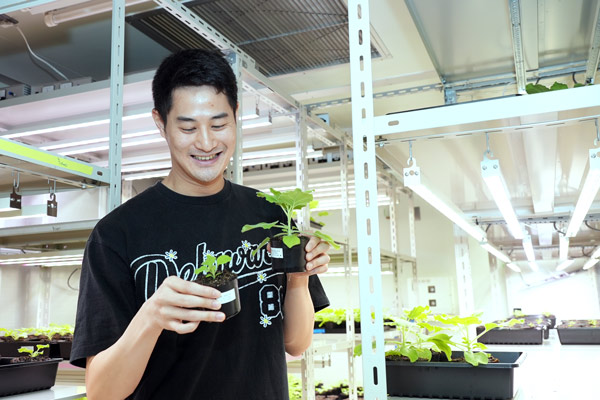
My research is important for society…
Because plants face multiple stresses, such as cold, drought, salinity and disease, especially under climate change. To survive, they need to accurately sense their surroundings. By uncovering how plants detect pathogens and environmental signals, we can help secure stable food supplies and restore ecosystems affected by climate change.
Our findings also open doors to practical applications, such as engineering crops with enhanced resistance to pathogens, reducing reliance on chemical pesticides.
What do you find most exciting about your research?
Each plant species has a unique set of receptors. We are characterizing these across a wide range of species and we don’t know what we’ll find. That sense of discovery and knowing something new is out there is what excites me most.
What do you enjoy about working at RIKEN?
RIKEN offers cutting-edge facilities and abundant resources, but what truly stands out is the people. Researchers, technicians and staff create a supportive environment where ideas flow freely. This openness fosters creativity and makes collaboration easy.
Do you have a message for those considering RIKEN?
RIKEN is a great place to do science. If you’re interested in a research group or mentor, don’t hesitate to reach out.
Reference
- Game-changing biotech for engineering pathogen-resistant crops
- Programming plants to fight pathogens
Rate this article