


Jul. 22, 2026 Perspectives Biology Medicine / Disease Chemistry Physics / Astronomy Engineering Computing / Math
AI for Science: Breaking the boundaries of what science can achieve
Efforts to accelerate science through artificial intelligence are known as “AI for Science,” and they are bringing major changes to the scientific world. RIKEN has launched the Advanced General Intelligence for Science (AGIS) program to develop AI specialized for research, with the goal of building new scientific research infrastructure for the AI era. Leading these efforts is Program Director Makoto Taiji.
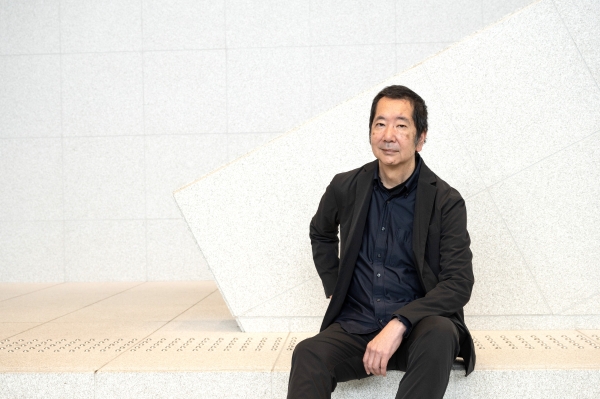
Makoto Taiji, Program Director
Advanced General Intelligence for Science Program (AGIS), TRIP Headquarters © 2026 RIKEN
AI for predicting protein structure
Behind the rapid spread of generative AI throughout society is the concept of the “foundation model.” The term, coined by researchers at Stanford University in 2021, describes the concept of building massive AI models using enormous amounts of data and then adapting them for a wide range of applications. Large language models (LLMs), such as those used by ChatGPT, are well-known foundation models. By being trained on vast amounts of textual data, they have acquired the ability to generate text and perform some form of reasoning.
Program Director Makoto Taiji, who was involved in developing MDGRAPE-4A, a supercomputer specializing in rapidly simulating changes in protein structures, has been paying close attention to AI models designed specifically for protein research.
“By training AI on vast amounts of data covering the relationship between amino acid sequences—the building blocks of proteins—and their three-dimensional structures, researchers were able to develop AIs that predict protein structure, like AlphaFold2,” says Taiji. “These systems attracted worldwide attention and gained additional prominence by the 2024 Nobel Prize in Chemistry. However, the use of foundational models changed the game. Meta’s ESMFold, released in 2022, was developed based on a foundational model—the protein language model ESM-2. Its performance was close to AlphaFold2’s, but at much higher speeds, demonstrating the potential of foundation models.”
Just as combinations of words can produce an infinite variety of sentences, sequences of just 20 types of amino acids are responsible for generating a seemingly infinite number of protein functions. There are expectations that AI will be able to discover complex rules that are beyond what people can divine, enabling researchers to predict the structures of previously unanalyzed proteins, as well as design proteins with novel functions.
What happened with protein foundation models could also occur in other fields of life sciences or even in materials science, where enormous volumes of data are generated and analyzed. Taiji emphasizes, “We need to create large-scale foundation models for many different areas of science.” If this can be accomplished, it will fundamentally change how research is conducted and expand the limits of what can be achieved.
Makoto Taiji with AGIS logo © 2026 RIKEN
Connecting scientific fields to stimulate innovation
Around the world, researchers are moving forward with efforts to create AI for scientific research by training AI on massive amounts of specialized scientific data. Japan also faces this challenge.
“At RIKEN, enormous amounts of scientific data are generated every day across diverse research fields. At the same time, we have computational resources such as supercomputers capable of handling that data. Japan’s path to success should lie in effectively connecting these strengths.”
Taiji began working toward launching a new project to accomplish this. And in April 2024, AGIS was established as part of the Transformative Research Innovation Platform of RIKEN platforms (TRIP initiative), which promotes collaboration beyond traditional research fields.
“The role of AGIS is to incorporate AI into the central processes of science, such as generating hypotheses and building models, thereby accelerating scientific discovery,” says Taiji. “To achieve this, it is essential to encourage RIKEN researchers to engage with AI and advance both AI development and AI-driven scientific research.”
Based on this vision, AGIS is pursuing four projects: (1) A development of life science and medical science models to predict the behavior of cells and organisms; (2) A development of materials and physical properties models to explore new polymers and materials; (3) A common infrastructure, including automated experiments using robots; and (4) A computational infrastructure to support these efforts with powerful computing capabilities.
Successful model development requires close collaboration between researchers in the field, who generate scientific data, and information specialists, who work with computers and AI. Taiji’s own career has bridged these two areas. Beginning with experimental physics and extending into simulations related to drug discovery and biology, he has been involved in developing specialized computers and machine learning technology. Through this experience, he has come to understand how important it is to connect researchers across disciplines.
“RIKEN’s greatest strength is that experts from different fields are located in neighboring laboratories. AGIS aims to leverage this collective capability and promote collaboration that crosses disciplinary boundaries.”
In March 2026, RIKEN introduced its latest supercomputer, geared toward AI for Science, and in June of the same year, announced its name: “RIKYU.” With this foundation now in place, an environment has been created where researchers generating scientific data and AI specialists can accelerate collaboration.
Exploring the data that is needed to feed AI
So, what will set SPring-8-II apart from the current facility?
To improve the performance of AI, large quantities of high-quality data are essential. The textual data used to train large language models is expected to eventually become exhausted. Scientific data, on the other hand, will continue to be generated through experiments, observations, and simulations. However, there is currently a severe shortage of data that is suitable for training AI to become more capable.
“Scientists have traditionally collected data in order to understand specific phenomena. However, the data that AI ‘wants’ may be different. It is important to establish systems that can collect data comprehensively, including data from experiments that do not produce the expected results.”
For this reason, AGIS is placing particular emphasis on automating experiments using robots and on a multimodal approach that simultaneously acquires different types of data. For example, in an experiment involving cells, researchers could simultaneously collect data on gene activity, the processes involved in protein production, and microscopic image and video data, then allow AI to learn the relationships between these different forms of information. Through this approach, AI may be able to discover fundamental principles and hidden connections that humans have been unable to identify.
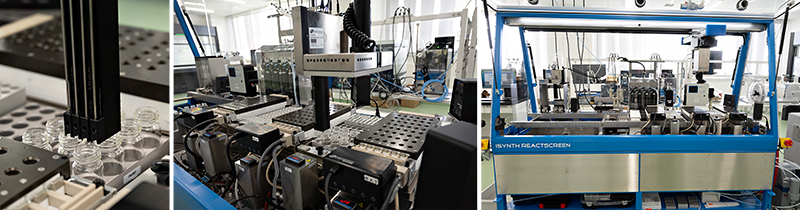
Recently installed a laboratory automation system for polymer science © 2026 RIKEN
Toward an “open” world where all can benefit from AI
Behind RIKEN’s commitment to AI for Science is also a strong sense of mission. What concerns Taiji is the possibility that access to scientific knowledge will become closed off. Large overseas tech companies, backed by substantial financial resources, have begun developing AI systems for scientific research. If this trend continues, there is a risk that important scientific knowledge could become concentrated in the hands of a small number of companies.
“Science has traditionally advanced through free discussion and collaboration in an open environment. We need to work to ensure that this environment will continue to exist in the future.”
AI for Science has already begun developing into a global trend involving both international competition and international collaboration. As part of a national strategy for science and technology using AI, the United States launched the “Genesis Mission” in 2025. This large-scale initiative aims to integrate scientific research and AI, and thus shares many common goals with RIKEN’s AGIS vision. In June 2026, the governments of Japan and the United States agreed to advance cooperation through the Genesis Mission. RIKEN is currently developing plans to serve as a central organization in this collaboration. The goal: a jointly built, open scientific foundation. It is imperative to ensure a future in which AI is not controlled by a select few, and where all can benefit from its capabilities.
RIKEN’s AI for Science initiative, driven forward through AGIS, represents a major step toward making that future a reality.
This article is a translation of the Japanese article "科学の限界を突破する「AI for Science」の最前線".
Rate this article